
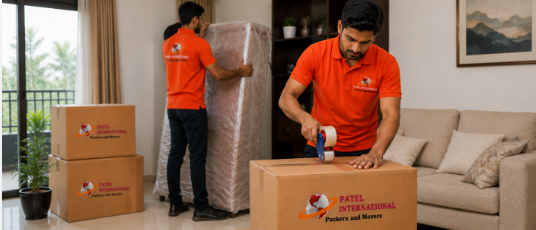
Finding and moving into a new house is one of the biggest changes you can make in your daily life. A new home can mean a better location, more space, a shorter commute, or simply a fresh start. However, getting from your current home to your new one requires much more than finding a property and packing a few boxes.
The entire process of finding and moving into a new house involves property research, budgeting, planning, decluttering, packing, transportation, loading, unloading, and finally settling into your new surroundings. Without proper preparation, these responsibilities can quickly become overwhelming.
The good news is that a house move becomes much easier when you divide it into manageable stages. Instead of trying to handle everything at once, you can create a clear plan that takes you from the initial property search all the way to unpacking the final box.
This guide explains everything you should consider when finding and moving into a new house, including choosing the right property, preparing your belongings, hiring professional movers, avoiding common mistakes, and making your new house feel like home.
Start With the Right House, Not Just an Attractive Property
The first challenge when finding and moving into a new house is choosing a property that genuinely suits your lifestyle.
A beautiful apartment or house may look impressive during your first visit, but appearance should not be your only consideration.
Think about how the property will work for your everyday routine.
Consider your workplace location, travel time, public transportation, nearby markets, schools, hospitals, parking availability, and other facilities you use regularly.
Your requirements may include:
- Number of bedrooms
- Property size
- Monthly rent or purchase budget
- Parking space
- Building security
- Elevator availability
- Storage space
- Public transportation
- Nearby healthcare facilities
- Schools and colleges
- Markets and grocery stores
Create two separate lists: your essential requirements and your preferred features.
This will make your property search more focused and help you avoid choosing a home that looks attractive but creates practical problems later.
Look Beyond the Four Walls of Your New Home
When finding and moving into a new house, you are not only choosing a property. You are also choosing a neighbourhood.
The location can have a significant impact on your daily life.
Before finalizing your new home, spend some time exploring the surrounding area.
If possible, visit during both peak and non-peak hours. This can give you a better understanding of traffic, noise levels, transportation availability, and general activity in the neighbourhood.
Check how long it will take to reach your workplace or other important locations.
You should also research the availability of essential services such as:
- Hospitals
- Medical stores
- Supermarkets
- Schools
- Banks and ATMs
- Restaurants
- Public transportation
Taking time to understand the neighbourhood can help you make a more informed decision before committing to the property.
Create a Realistic Budget Before Moving
Budgeting is an important part of finding and moving into a new house.
Many people calculate the rent, deposit, or purchase price but forget about the additional expenses associated with relocation.
Your moving budget may need to include:
- Property deposit
- Brokerage fees
- Professional moving services
- Packing materials
- Loading and unloading
- Transportation
- Vehicle relocation
- Insurance options
- Temporary storage
- Cleaning services
- Utility connections
- Minor repairs
- New furniture
Unexpected costs can quickly add up.
Creating a separate relocation budget allows you to understand how much you can realistically spend on your move.
If you plan to hire professional packers and movers, request a written quotation and confirm which services are included.
Comparing complete quotations is more useful than simply choosing the company offering the lowest price.
Inspect Your New House Before Moving Day
An important but often overlooked part of finding and moving into a new house is inspecting the property before your belongings arrive.
Check the condition of the property carefully.
Inspect:
- Doors and locks
- Windows
- Electrical switches
- Power outlets
- Plumbing
- Water supply
- Walls
- Flooring
- Kitchen fixtures
- Bathroom fittings
If repairs or painting are required, completing them before moving your furniture into the property is usually easier.
You should also measure important areas of the house.
Make sure your large furniture and appliances can pass through entrances, corridors, staircases, and elevators.
This is especially important for items such as beds, wardrobes, sofas, dining tables, refrigerators, and washing machines.
Finding out that your large wardrobe cannot fit through the entrance on moving day creates a problem that could have been avoided with basic measurements.
Give Yourself Enough Time to Prepare
Rushing is one of the easiest ways to turn finding and moving into a new house into a stressful experience.
Once your new property and moving date are confirmed, create a moving timeline.
Start with tasks that can be completed early.
These may include decluttering, comparing moving companies, collecting packing supplies, and packing items you rarely use.
As moving day approaches, gradually pack the belongings you use more frequently.
Your timeline should include:
- Finalizing your new property
- Confirming the moving date
- Decluttering your belongings
- Getting moving quotations
- Booking professional movers
- Arranging packing materials
- Packing room by room
- Labelling cartons
- Updating your address
- Preparing an essentials bag
- Confirming transportation
Starting early gives you enough time to handle unexpected problems without disrupting your entire moving plan.
Declutter Before Packing a Single Box
One of the smartest things you can do when finding and moving into a new house is reduce the number of belongings you need to transport.
Moving is an excellent opportunity to decide what you genuinely need.
Go through your belongings room by room.
Separate items into categories such as keep, donate, sell, recycle, and discard.
You may discover clothes you have not worn for years, damaged furniture, unused electronics, duplicate kitchen items, and other belongings that no longer serve a purpose.
There is little benefit in paying to pack and transport items you plan to throw away after reaching your new home.
Decluttering means fewer boxes, less packing work, and a more organized new house.
Pack Room by Room Instead of Packing Randomly
Packing without a system creates unnecessary confusion.
A better approach to finding and moving into a new house is to pack one room or category at a time.
Start with items you rarely use.
Seasonal clothing, books, decorations, artwork, and extra kitchenware can usually be packed early.
Use appropriate packing materials according to the type of item.
Common materials include:
- Corrugated cartons
- Bubble wrap
- Stretch film
- Packing tape
- Protective sheets
- Cushioning materials
Label every box clearly.
Instead of simply writing “Household Items,” use specific labels such as “Kitchen: Plates and Glasses” or “Bedroom: Clothes.”
This will make unpacking much easier.
Clearly identify boxes containing fragile items so they can receive additional attention during loading and transportation.
DIY Moving vs Hiring Professional Packers and Movers
One of the biggest decisions involved in finding and moving into a new house is whether to move independently or hire professionals.
Both options have advantages depending on your situation.
| Factor | DIY House Move | Professional Packers and Movers |
|---|---|---|
| Packing | Handled personally | Professional service may be available |
| Packing materials | Purchased separately | May be included in the package |
| Heavy furniture | You arrange assistance | Moving team handles the process |
| Loading | Self-managed | Professional loading available |
| Transportation | Arranged independently | Coordinated by moving company |
| Unloading | Self-managed | Professional unloading available |
| Physical effort | Higher | Lower for the customer |
| Time commitment | Usually higher | More convenient |
| Long-distance relocation | More difficult to coordinate | Professional coordination available |
| Overall involvement | High | Reduced |
A DIY move may work well if you have limited belongings and are moving a short distance.
For a complete household relocation, however, professional assistance can save considerable time and physical effort.
Professional movers can be particularly useful when dealing with heavy furniture, appliances, fragile belongings, and long-distance transportation.
Why Professional Packing Can Make a Difference
Packing is one of the most important stages of finding and moving into a new house.
Your belongings may need to travel through elevators, staircases, building corridors, and roads before reaching the destination.
Proper packing provides additional protection during handling and transportation.
Different belongings require different approaches.
Furniture may require surface protection, while glassware and electronics may need cushioning.
Professional moving companies can provide packing services based on the customer’s relocation requirements.
Patel International Packers and Movers provides relocation-related services that can assist customers with different stages of a move.
Before booking, confirm exactly which packing materials and services are included in your individual quotation.
Make Moving Day Easier With Proper Preparation
Moving day is the stage where all your planning comes together.
When finding and moving into a new house, preparing for moving day in advance can prevent unnecessary delays.
If you are packing your belongings yourself, complete most of the packing before the moving team arrives.
Keep important personal belongings separately.
Your essentials bag may contain:
- Identification documents
- Property documents
- Medicines
- Cash and valuables
- Mobile phones
- Chargers
- Laptop
- Keys
- Toiletries
- Basic clothing
These belongings should remain with you rather than being packed inside general moving cartons.
You should also confirm the pickup time and destination details with your moving company.
Inform the movers about parking restrictions, narrow entrances, elevators, staircases, or unusually heavy belongings before moving day.
Moving to Another City Requires Additional Planning
Long-distance finding and moving into a new house can be more complicated than relocating within the same neighbourhood.
Your belongings may spend significantly more time in transportation.
This makes proper packing, organized loading, transportation planning, and communication particularly important.
Before booking a long-distance move, ask your moving company about:
- Expected pickup date
- Estimated delivery timeline
- Packing services
- Loading and unloading
- Transportation arrangements
- Shipment updates
- Vehicle transportation
- Insurance options
- Storage facilities
Do not assume every service is automatically included.
Get the complete scope of work in writing before confirming your booking.
Do Not Forget About Your Car or Bike
For people finding and moving into a new house in another city, vehicle transportation may become another important consideration.
Driving a car or bike over a long distance may not always be practical.
Some professional relocation companies provide vehicle transportation services in addition to household moving.
If you need to transport a vehicle, ask how it will be handled, the expected transportation time, available insurance options, and documentation requirements.
Plan vehicle transportation at the same time as your household relocation rather than leaving it until the last minute.
Update Your Address and Essential Services
The physical relocation is only one part of finding and moving into a new house.
You may also need to update your address with relevant service providers and institutions.
Depending on your circumstances, this may include:
- Banks
- Insurance providers
- Employers
- Subscription services
- Delivery accounts
- Government documents where applicable
You should also arrange essential utilities for your new property.
Check electricity, water, internet connectivity, and other necessary services before moving day.
Arriving at your new house only to discover that essential utilities are unavailable can make the first few days unnecessarily difficult.
What to Do Immediately After Reaching Your New House
The process of finding and moving into a new house does not end when the moving vehicle arrives.
You still need to unload, inspect, unpack, and organize your belongings.
Do not try to unpack everything simultaneously.
Start with the rooms you need immediately.
The bedroom, bathroom, and kitchen should generally receive priority.
Once these areas are functional, move on to the living room, storage areas, and other spaces.
Use your box labels to place cartons in the correct rooms.
Check your belongings during unloading and report any concerns according to the process agreed with your moving company.
Common Mistakes That Can Make Your House Move Difficult
Poor planning can create unnecessary problems during finding and moving into a new house.
One of the most common mistakes is starting too late.
Other mistakes include:
- Moving unnecessary belongings
- Failing to create a moving budget
- Not researching the neighbourhood
- Forgetting to measure large furniture
- Using poor-quality packing materials
- Not labelling cartons
- Packing valuables with general household goods
- Choosing movers based only on price
- Accepting only a verbal quotation
- Ignoring insurance options
- Not confirming delivery timelines
Most of these problems can be avoided with preparation and clear communication.
How to Choose the Right Moving Company
Selecting professional movers is an important decision when finding and moving into a new house.
Start by understanding exactly what services you require.
For example, you may need only transportation, or you may prefer a complete service that includes packing, loading, transportation, unloading, and unpacking.
Compare moving companies based on:
- Experience
- Business credentials
- Written quotations
- Packing services
- Loading and unloading
- Transportation options
- Long-distance moving capabilities
- Vehicle transportation
- Storage facilities
- Insurance options
- Customer support
Ask for a detailed quotation rather than relying on verbal pricing.
Also, disclose important information about your property before booking.
If your building does not have an elevator or the moving vehicle cannot park close to the entrance, the moving company should know in advance.
How Patel International Packers and Movers Can Help
Professional assistance can simplify the physical relocation involved in finding and moving into a new house.
Patel International Packers and Movers offers moving and relocation solutions for customers with different requirements.
Depending on your location and moving requirements, professional services can help with stages such as packing, loading, transportation, unloading, and other relocation needs.
For families moving to another city, professional assistance can be particularly useful because long-distance relocation requires greater coordination than a simple local move.
When contacting a moving company, provide accurate information about your pickup location, destination, quantity of belongings, property access, and expected moving date.
Before confirming your booking, verify the services available for your specific route and request a written quotation.
Working with professional movers can reduce the physical workload involved in finding and moving into a new house, allowing you to focus more attention on preparing for your new home.
Turn Your New House Into a Comfortable Home
After weeks of planning, packing, and transportation, the final stage of finding and moving into a new house is settling into your new environment.
Do not feel pressured to organize everything on the first day.
Unpack gradually and focus first on making the essential areas functional.
Once the basics are complete, you can arrange furniture, decorate rooms, organize storage, and personalize the space.
Take some time to explore your new neighbourhood as well.
Find nearby grocery stores, medical facilities, restaurants, transportation options, and other services you may need regularly.
A new property begins to feel like home when your daily routine becomes comfortable and familiar.
Final Thoughts
Finding and moving into a new house is a journey that begins long before moving day. It starts with understanding what you need from your next property and continues through budgeting, location research, property inspection, decluttering, packing, transportation, and unpacking.
The most effective way to manage a house move is to prepare early and stay organized.
Choose your new property based on practical requirements rather than appearance alone. Create a realistic moving budget, remove belongings you no longer need, pack systematically, and keep important documents and valuables with you.
For larger households or long-distance moves, professional moving assistance can help manage physically demanding tasks and transportation logistics.
If you are currently finding and moving into a new house, you can explore relocation services from Patel International Packers and Movers and discuss your specific moving requirements directly with their team.
With careful preparation and the right moving support, finding and moving into a new house can become a more organized experience and give you the opportunity to focus on what matters most: comfortably settling into your new home.
Frequently Asked Questions
How should I start finding and moving into a new house?
Start by defining your budget, preferred location, property size, and essential requirements. Once you finalize the property, create a timeline for decluttering, packing, hiring movers, transportation, and unpacking.
How early should I prepare for moving into a new house?
Starting several weeks before your expected moving date gives you more time to declutter, compare movers, purchase packing supplies, and pack systematically.
Is hiring professional packers and movers worth it?
Professional assistance can be valuable for larger households, long-distance relocations, heavy furniture, appliances, and fragile belongings. The right option depends on your budget and moving requirements.
What should I keep separately on moving day?
Keep identification documents, property papers, jewellery, cash, medicines, phones, chargers, keys, and essential personal belongings with you.
How can I reduce moving costs?
Declutter before packing, avoid transporting unnecessary items, compare detailed quotations, and understand exactly which services are included in your moving package.
What is the biggest mistake when finding and moving into a new house?
Leaving everything until the last minute is one of the biggest mistakes. Early planning gives you enough time to solve problems and make better decisions throughout the relocation.
Can professional movers help with finding and moving into a new house?
Professional movers generally handle the physical relocation rather than property searching. Depending on the provider, they may assist with packing, loading, transportation, unloading, vehicle relocation, and storage.